Industrial Cable Management Best Practices for Control Panels and Plant Wiring
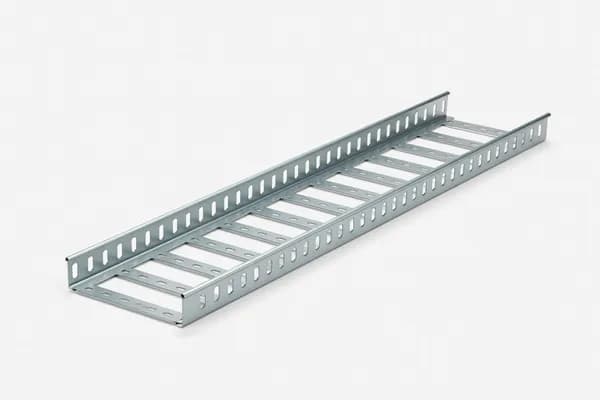
Effective industrial cable management within control panels and plant wiring installations hinges on adherence to rigorous standards such as IEC 61537, NEMA VE 1, IEEE 576, NEC (NFPA 70), IEEE 525, and IEC 61914. IEC 61537 governs the technical requirements and testing of cable tray systems—including metal, wire mesh, and nonmetallic variants—ensuring they can support electrical cables safely under operational stresses. Complementing this, NEMA VE 1 details the construction and load capacity requirements for metal cable trays, mandating resistance to sidewall bearing pressures up to 300 lbf/ft (4378 N/m), vital for power and instrumentation wiring. Compliance with NEC is also mandatory, especially for outdoor cable trays which require support intervals not exceeding 300 mm (12 in.) and must be securely fastened every 1.4 m (4.5 ft) to maintain structural integrity under environmental and operational loads.
Selection of cable management components must also consider fill ratios and mechanical protection. NEC stipulates cable tray fill limits of 53% for single cable layers, 31% for two layers, and 40% for three or more, minimizing overheating and mechanical stress. Cable cleats used in high-electromagnetic force environments should meet IEC 61914 requirements, guaranteeing resistance up to 10,000 lbs of electromagnetic force and robustness against temperature, corrosion, and UV exposure. Cable ties should comply with IEC/UL 62275 to ensure reliable fixing without damaging cable insulation or conductors. During conduit installation, maintaining a pulling ratio (D/d) between 2.8 and 3.1 for three equal cables prevents jamming; adherence to ANSI/NEMA WC series and IEEE 1185 methods — including lubrication and tension monitoring — further reduces risk of cable damage during pulls.
Voltage and insulation ratings must be tailored to application safety and longevity. IEEE 525 recommends using low-voltage control cables rated for 600 V or 1000 V insulation to provide adequate spike protection in substations and industrial plants. For nuclear or highly regulated plant environments, IEEE 383-compliant cable insulation is critical to meet stringent fire resistance and radiation tolerance requirements. By integrating these standards and applying proven engineering practices, professionals can achieve optimal cable support, protection, and operational reliability in complex industrial electrical systems.