Contactor vs. Relay: Key Differences and When to Use Each
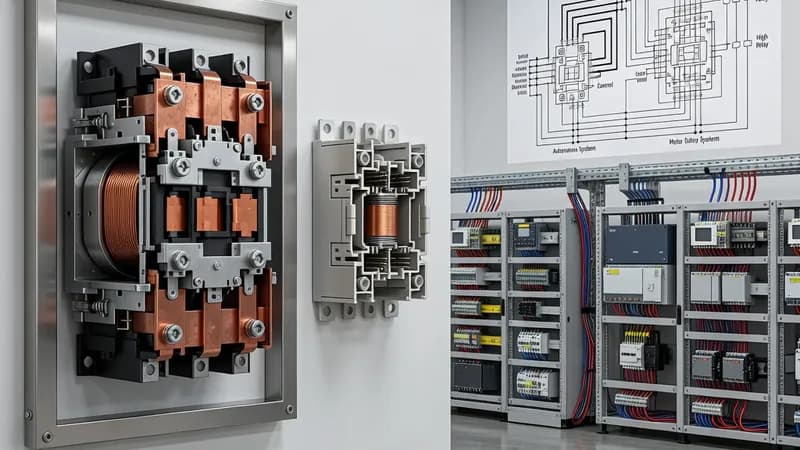
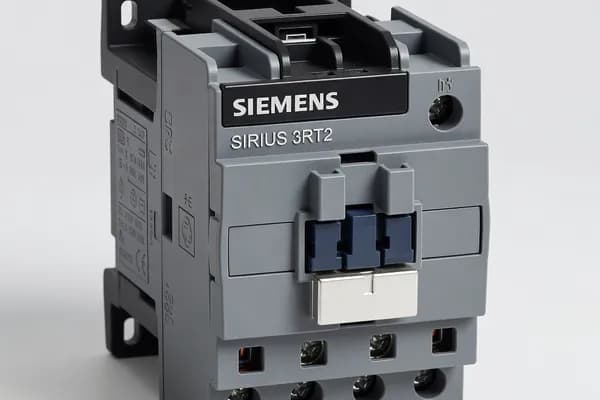
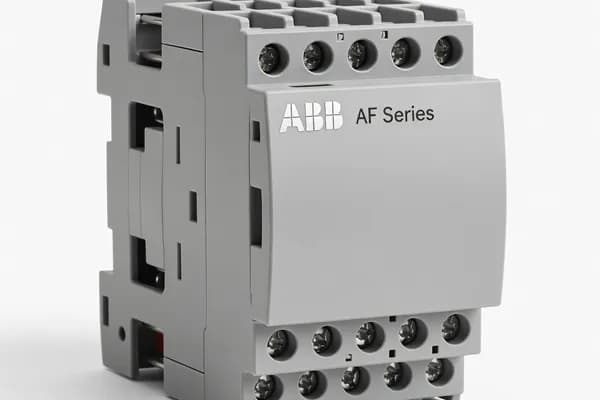
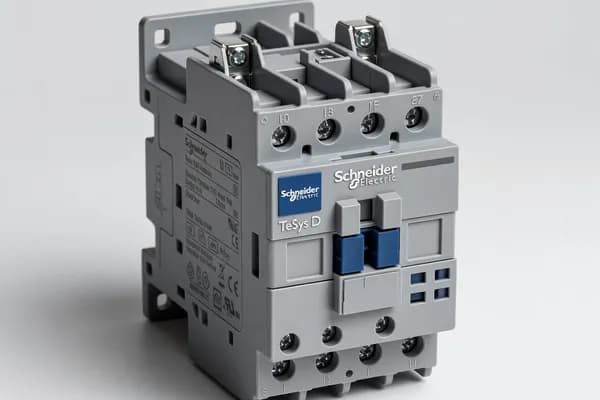
Contactors and relays serve distinct purposes in industrial electrical systems, primarily differentiated by their capacity and construction. Contactors are designed to handle high-power loads typically starting from 10-15 amperes and extending up to thousands of amperes at voltages reaching 1000V AC or DC. This makes them ideal for switching large inductive loads such as motors, transformers, and HVAC systems. They feature robust open-frame assemblies with built-in arc suppression components like arc chutes to manage the significant electrical arcs generated during load switching, especially with motor inrush currents which can be 6 to 8 times the running current. Compliance with IEC and UL standards ensures their suitability for three-phase industrial applications, often operating at coil voltages of 110-220V.
In contrast, relays are engineered for low-power applications dealing with control signals and small resistive loads up to 10-30 amperes at a maximum of 250V AC. Their compact plastic-enclosed design supports high-frequency switching required in electronics and automation logic circuits. Unlike contactors, relays do not incorporate extensive arc suppression, making them unsuited for frequent switching of large inductive loads. Their coils typically operate at low control voltages ranging between 5 and 24V DC, making them compatible with digital control systems and PLCs. The relay contacts generally provide multiple configurations (NO, NC, changeover) to facilitate complex control schemes within single-phase electrical environments.
When selecting between a contactor and a relay, engineers must consider the nature of the load and application demands. For heavy-duty, three-phase systems where durability and arc management are critical, a contactor meeting IEC 60947-4-1 standards is advisable. Conversely, for signal switching, control circuits, or low-current resistive loads, relays compliant with IEC 60947-5-1 provide cost-effective, reliable operation. Maintenance requirements and acoustic noise are also practical considerations; contactors typically require more routine checks and generate louder coil hum due to their size and coil power, while relays are quieter and require less upkeep but cannot manage high power loads. Cost differences arise naturally, as contactors demand more material and complex manufacturing to handle higher electrical stresses safely.