How to Select the Right Circuit Breaker for Industrial Applications
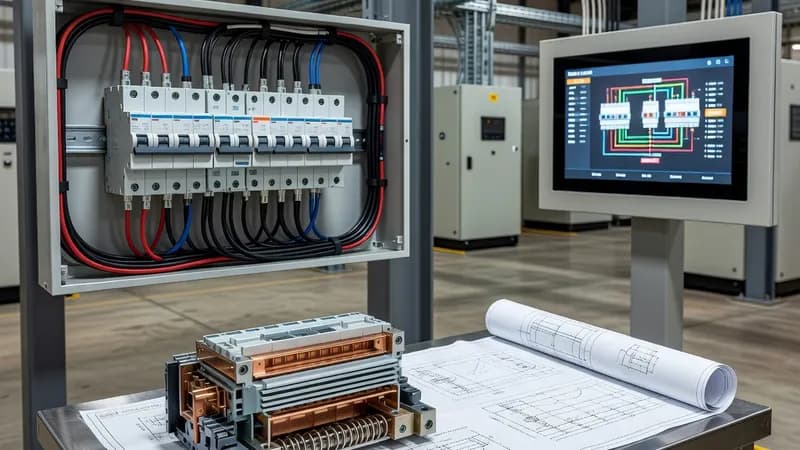
Selecting the appropriate circuit breaker for industrial applications requires a thorough evaluation of the electrical system’s characteristics, environmental conditions, and compliance with key international standards. Voltage rating is critical and must meet or exceed the system’s nominal voltage, typically ranging from 208V to 480V AC for three-phase industrial systems, with molded-case circuit breakers (MCCBs) commonly rated up to 600V. Adherence to IEC 60947-2 ensures breakers are rated at a 40°C ambient temperature, distinct from the 30°C rating used in domestic IEC 60898 breakers, highlighting the industrial focus on higher operational temperatures. Incorrect voltage ratings not only compromise safety but may lead to breaker failure during fault conditions.[1][2][6]
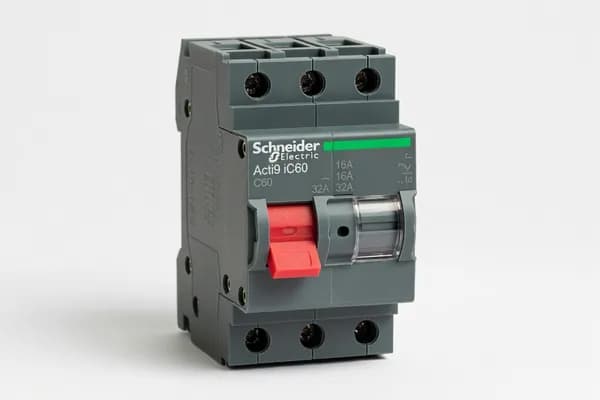
Current rating selection must align with the continuous load profile, adhering to the National Electrical Code (NEC) Article 210.19(A)(1), which mandates sizing conductors and breakers to 125% of the continuous load for at least three hours. This margin protects against thermal aging and nuisance tripping under prolonged load. Additionally, IEC standards recommend derating current ratings for ambient temperatures above or below 40°C to maintain reliability—for example, an IEC iC60 breaker rated at 32A at 40°C effectively increases to 37.1A at 10°C. Large industrial applications often utilize breaker frames sized between 800A and 1200A for distribution panels, ensuring adequate capacity for motor starters, transformers, and feeder circuits.[2][6][8]
The interrupting capacity, denoted as Icu or Icn, must surpass the maximum prospective short-circuit current at the installation point to safely interrupt fault currents without damage. IEC 60947-2 and UL 489/CSA standards provide guidelines on these ratings; for instance, UL 489 covers MCCBs up to 600V with interrupting ratings tailored to temperature limits of 50°C (122°F) or 60°C (140°F) for 100% rated breakers. Coordinated tripping characteristics based on IEEE and ANSI/IEEE C37 series ensure selective protection, minimizing downtime by isolating faults locally. Compliance with these standards guarantees not only safety but also interoperability and long-term performance across industrial environments.[1][2][5][6][8][10]