Industrial Sensor Selection: Proximity, Photoelectric, and Analog Sensors
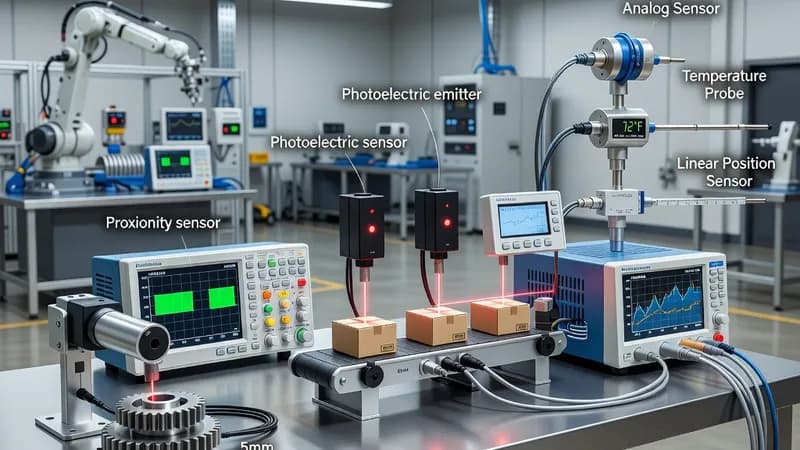
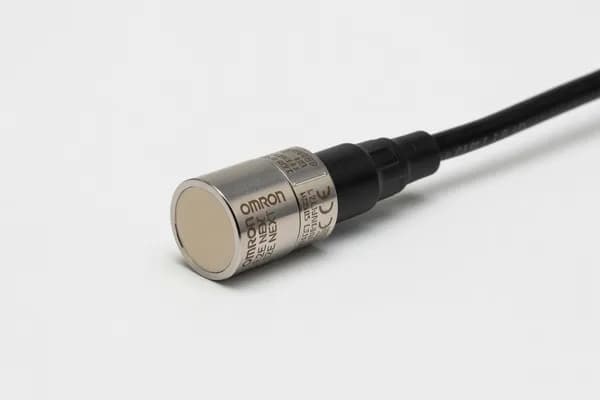
Proximity sensors are essential components in industrial automation, offering non-contact detection of objects through inductive, capacitive, ultrasonic, or magnetic principles. Inductive proximity sensors typically detect ferrous and non-ferrous metals up to 30 mm, with sensing distances ranging from 0.5 to 40 mm. They support switching frequencies up to 5 kHz and are ruggedized with IP67 to IP69K ratings to withstand harsh industrial environments, including washdown applications. Operating temperature ranges span from -25°C to +70°C, extendable to -40°C to +100°C with specialized models. Compliance with IEC 60947-5-2 ensures response times under 10 ms and repeat accuracy within ±10% of sensing distance, along with immunity to electromagnetic interference per IEC 61000-4 standards. Moreover, sensors must adhere to IEC 60204-1 for fault-tolerant wiring and positive-guided contacts in machinery safety circuits, and meet NEC Article 670 requirements, including UL 508 certification and arc-flash protection protocols per IEEE 1584 when used in panels exceeding 50 V.
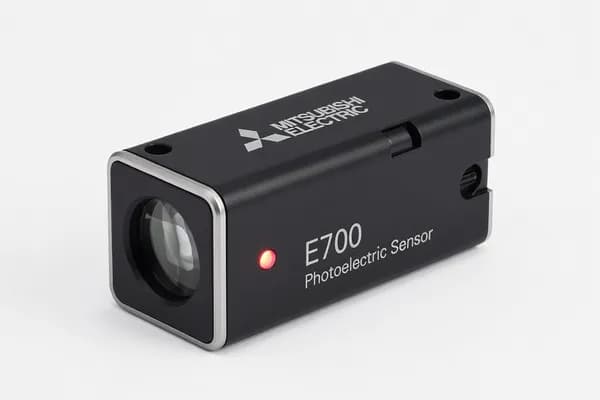
Photoelectric sensors operate by modulating light beams through configurations such as through-beam, retro-reflective, and diffuse modes, detecting object presence based on reflectivity and interruptions in light paths. They are vital for applications requiring longer detection ranges and transparent object sensing. Selection criteria hinge on factors like sensing distance up to several meters, light source wavelength, response time, and environmental robustness. Proper EMC shielding compliant with IEC 61000-4-2 ensures stable operation in noisy electromagnetic environments common in factories. Integrating sensors with IO-Link communication protocols enhances diagnostics and quality metrics in Industry 4.0 automation systems, aligned with IEEE P2510 standards, allowing real-time condition monitoring and predictive maintenance.
When selecting analog sensors, considerations include output linearity, resolution, and signal conditioning capabilities to accurately measure parameters such as position, pressure, or temperature. Industrial analog sensors typically provide scalable 4-20 mA or 0-10 V signal outputs compatible with standard control systems. Consistency with international safety and performance standards ensures reliability; for example, conforming to IEC 60947 for control device interoperability and IEC 60204-1 for electrical equipment safety. Best practice involves mounting sensors with sufficient clearance—often twice the sensing distance laterally—to mitigate false signals, utilizing shielded designs when detecting metals, and subjecting devices to durability testing over 1 million cycles as per IEC 60947-5-2. Network integration via TSN (Time-Sensitive Networking) frameworks, such as IEC/IEEE 60802, facilitates deterministic communication with jitter below 1 µs, crucial for synchronized industrial control applications.