Motor Starter Types: DOL, Star-Delta, Soft Starter, and VFD Compared
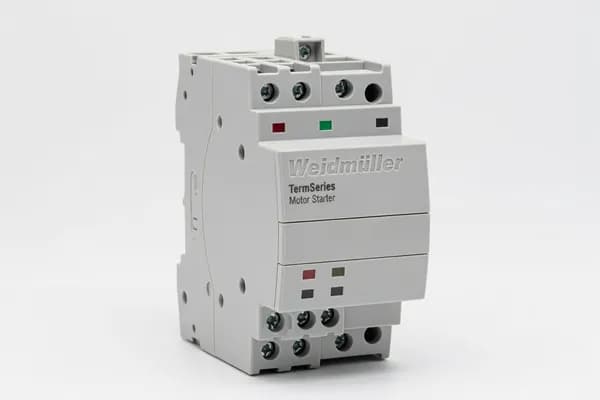
When selecting motor starters for three-phase induction motors, understanding the fundamental operational differences is critical to ensuring appropriate application and motor protection. Direct-On-Line (DOL) starters connect the motor directly to the supply, resulting in an initial starting current of 6 to 10 times the motor's full load amperage (FLA), which often causes mechanical and electrical stress. According to IEC 60947-4-1 standards, DOL starters suit smaller motors up to approximately 5 HP, especially where high starting torque is required and power supply impact is minimal. However, the high inrush current can cause voltage dips and transient disturbances in industrial settings with sensitive loads.
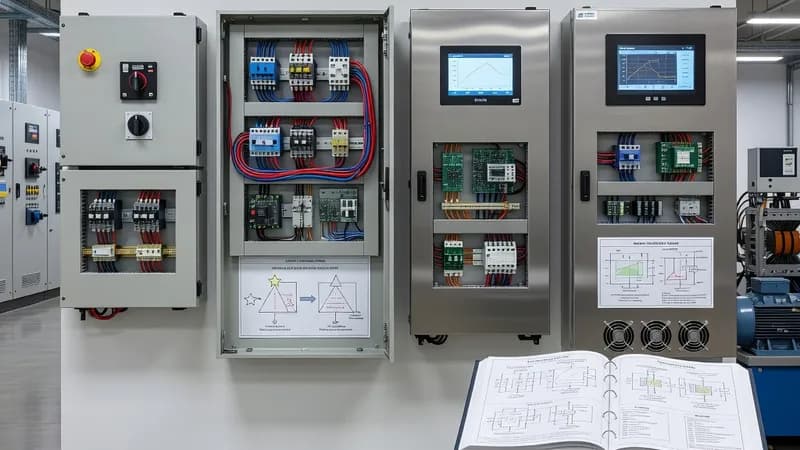
Star-Delta starters alleviate these issues by initially connecting the motor windings in a star configuration, reducing voltage applied to each winding to approximately one-third, resulting in starting currents around two to three times FLA. Torque is consequently reduced to roughly 33-58% of full load torque due to the 1/√3 voltage factor. Transitioning from star to delta configuration occurs after motor acceleration, typically controlled by a timer relay per IEC and NEMA standards. Star-Delta is suitable for motors in the 5 to 100 HP range and unloaded or lightly loaded applications such as fans and pumps, but is not appropriate for high inertia or loads requiring full starting torque.
Soft starters utilize thyristor-based phase angle control to gradually ramp up voltage, allowing adjustable starting currents typically between 1.5 and 4 times FLA and torque control from zero up to full torque. This precision reduces mechanical stress and electrical disturbances without the initial large inrush currents associated with DOL starters. Additionally, soft starters provide motor protection features conforming to IEC 60947-4-2 requirements, making them suitable for larger motors exceeding 5 HP, particularly those with significant inertia or complex load profiles.
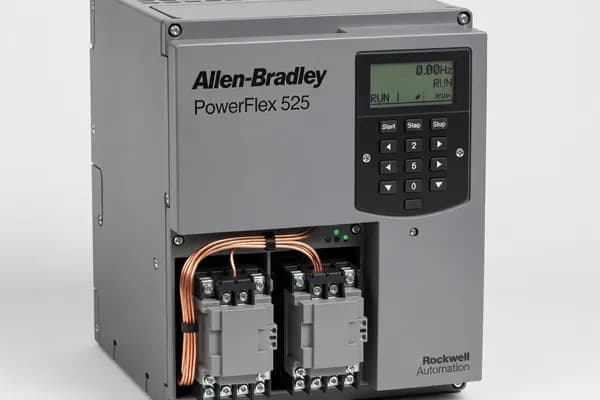
Variable Frequency Drives (VFDs) offer the most versatile motor control by simultaneously adjusting voltage and frequency, enabling precise speed regulation from zero to 150% of rated speed with starting currents limited to 1-1.5 times FLA. Although VFDs are the most expensive option, their ability to enhance energy efficiency, reduce mechanical wear, and provide advanced motor protection and diagnostic functions make them ideal for variable load industrial applications across all motor sizes. Implementing VFDs in compliance with IEEE 519 harmonic standards and IEC 61800-9-2 ensures power quality and system reliability.