Transformer Sizing Fundamentals for Industrial Power Distribution
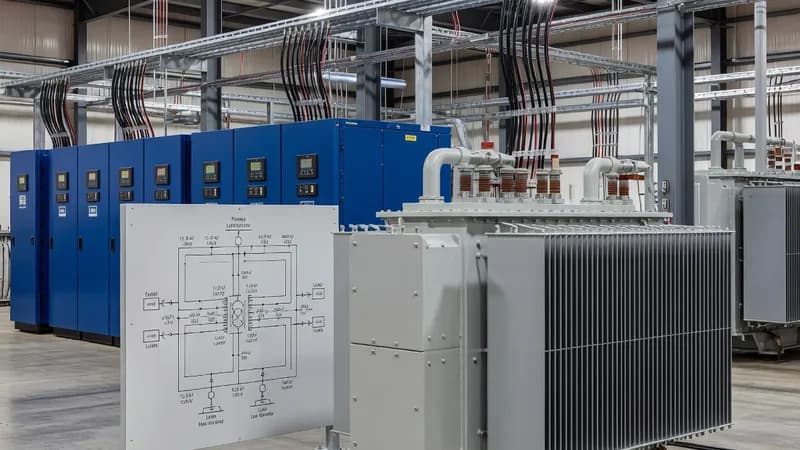
Transformer sizing is a critical process in industrial power distribution, ensuring that the selected transformer meets the electrical load requirements without compromising safety or efficiency. The sizing is primarily based on the kVA rating, which represents the transformer's ability to supply apparent power. An undersized transformer risks overheating and premature failure due to overloading, while an oversized transformer leads to increased capital expenditure and energy losses during periods of low load. Industry best practice dictates sizing transformers slightly above the maximum calculated load demand to include safety margins and accommodate potential future expansion, aligning with IEC 60076 standards that govern power transformer ratings and performance.
Key factors in transformer sizing include calculating the total connected load, which aggregates all industrial loads such as motors, HVAC systems, lighting, and office equipment. Applying load diversity factors is essential, as not all equipment runs simultaneously; for example, production equipment commonly has a diversity factor of 70-80%, whereas lighting demand is nearly continuous at 90-100%. Additionally, power factor plays a vital role—low power factors increase current draw and necessitate transformers with higher kVA ratings to handle the increased apparent power. Voltage parameters must also be respected, ensuring primary and secondary voltages match system and equipment requirements. Configuring tap settings allows for voltage regulation and helps compensate for voltage drops under load, critical for maintaining stable voltage profiles in industrial environments.
Standard transformer sizes range broadly from 5 kVA up to 1000 kVA, including common intermediate sizes such as 75 kVA, 150 kVA, and 300 kVA. Selecting the next standard size above the precise calculated load is a practical guideline to guarantee capacity sufficiency and future scalability while adhering to IEC 60076 guidelines. These international standards not only address rating and efficiency but also detail testing, insulation levels, and maintenance protocols, making them indispensable for engineers specifying reliable industrial power transformers. Proper adherence to these principles ensures robust power distribution systems capable of supporting complex industrial processes safely and economically.